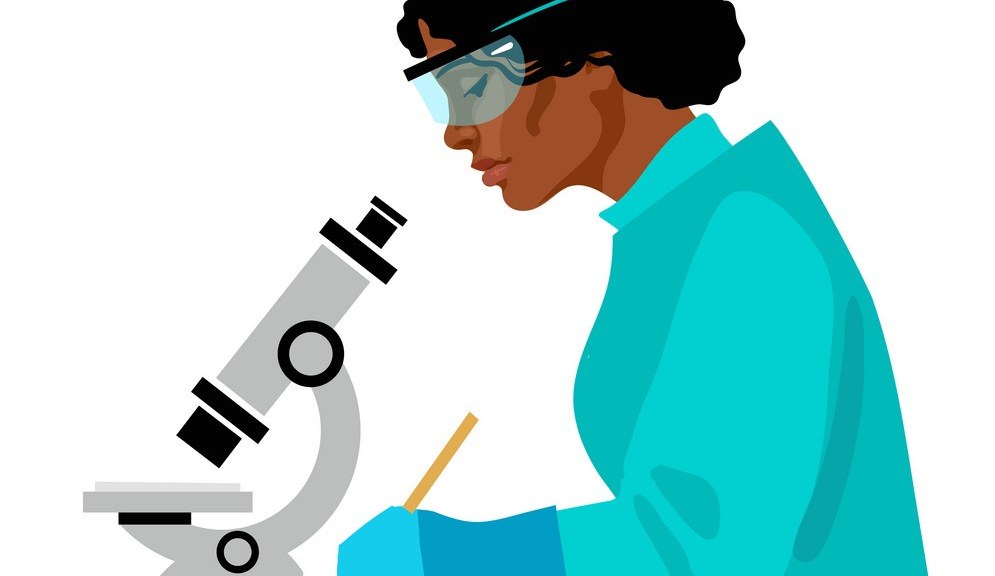
Tomorrow is my last day in academia. I am very ready to leave and heal from the trauma I’ve endured during my almost 3 years of doing full time research. Unfortunately when I scower the internet, a lot of other black scientists, doctors, and students are doing the same. We feel there is no space for us in this seemingly posh academia world as even the brightest students are worn down to their core in these settings. But why? Why does it seem like we don’t belong in these settings? Why is discrimination, racism, sexism, and overall poor treatment seen as the norm?
Faculty members and lab managers have watched me be screamed at inappropriately, I’ve been tugged, and pulled. Sexual remarks seem to be overtly present when it comes to black students compared to my non-black peers. For a while, I felt that all of this was my fault. I felt like I didn’t want to exist anymore because of how I was treated on a daily basis. But with the help of a solid friend group, my therapist, mentors, and medication I was able to see the light again. And now I want to get to the bottom of this problem.
It’s definitely going to take me more than one blog post to get all of my thoughts down about this issue but the least I can do is start…
We can’t do research about the issues affecting our community.
Recent research has suggested that there is a racial disparity in grant funding for African-American/Black scientists, most of which could be due to their research choice. Now, just like any scientist, I want to find the answers to problems in the world. these problems usually are significant to me as they are something I witness everyday, most of which reside in black communities. However, this new research shows that you are less likely to be funded if your topic has key words such as disparities and socioeconomic.
How can we be expected to continue our work as scientists but be forced to perform it from a Caucasian perspective. It infuriates me that this is so prevalent when research and medicine should work to serve all members of its community. How are we expected to be successful as scientists if we can’t work on what we are passionate about because unfortunately without funding in science the research simply can’t be conducted.
This lead me down a research rabbit hole where I learned about white empiricism.
White empiricism is the phenomenon through which only white people (particularly white men) are read has having a fundamental capacity for objectivity and Black people (particularly Black women) are produced as an ontological other. This phenomenon is stabilized through the production and retention of what Joseph Martin calls prestige asymmetry, which explains how social resources in physics are distributed based on prestige. In American society, Black women are on the losing end of an ontic prestige asymmetry whereby different scientists “garner unequal public approbation” in their everyday lives due to ascribed identities such as gender and race (Martin 2017, 475). White empiricism is one of the mechanisms by which this asymmetry follows Black women physicists into their professional lives. Because white empiricism contravenes core tenets of modern physics (e.g., covariance and relativity), it negatively impacts scientific outcomes and harms the people who are othered.
There has actually been a lot of controversy over this paper by Prescod-Weinstein. The author argues that scientific research (in this case physics) is not as objective as we are primed to believe. What caught my eye was “unequal public approbation” or unequal public praise from the white scientists in every field. Their topics and research studies are seen as very objective and then are praised with recognition and funding that allow them to continue their research. Where as performing research on health disparities and other issues from minority communities may not be seen as such.
Critics say that there are major flaws in saying that racism affects empirical data. They see that fact is fact no matter who discovered it. Many critics say that it is a form of hypocrisy and see no persuasiveness of racism on scientific discovery.
I of course disagree with the critics and believe that racism has always persuaded scientific research and has shaped the current world of science because of it. It is so obvious as it is still seen today as the “top researches” in most STEM fields are white men and women. That is no coincidence.
As long as we keep believing that racism and underlying biases don’t affect the scientific community, the bigger these problems get leading to negative impacts on the black community as a whole.
All of the research I have been looking into has shown me how academia views black scientists and research about our community. I wonder if its not taken seriously enough. Are there just not black people on these grant approving committees so its just not even crossing their minds? How can we get more black people in these positions so we can actually start diversifying scientific research?
There is so much more I want to dive into. This new job change and how much it was needed for me was a big wake up call. I am excited for this new journey and to hopefully have the space to answer my questions outside of academia.
 The Chatty Cat